Subaru understands that fuel efficiency is of paramount importance each and every day.
That's why Subaru is committed to providing an array of fuel-efficient vehicles.
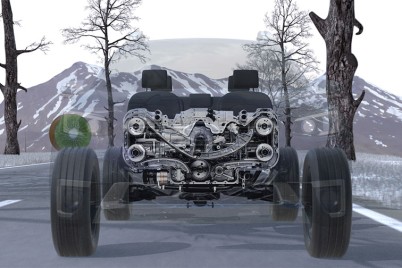
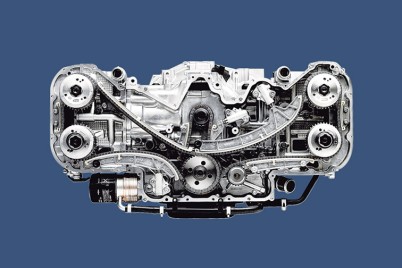
Breakthroughs in fuel reduction technology such as the world's first Boxer Diesel
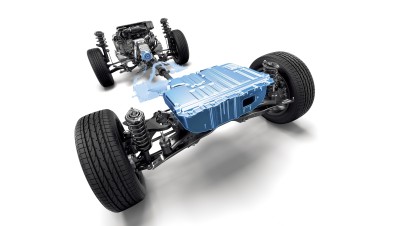
engine in a passenger vehicle and the worlds first Lineartroinc™ CVT transmission
are both underpinning components to achieving exceptional fuel efficiency figures.
 
 
| Vehicle |
Model |
Year |
ADR Test / European Test* |
Independent AA Test |
AA 2010 Energywise Rally |
 |
New Impreza
 | 7.1 | 2012 | 6.9 | - | - |
| 6.8 | 2012 | - | - | - |
| 7.1 | 2012 | 6.8 | - | - |
| 6.8 | 2012 | 6.8 | - | - |
| 7.1 | 2012 | 6.8 | - | - |
| 6.8 | 2012 | 6.8 | - | - |
| 7.1 | 2012 | 6.8 | - | - |
| 6.8 | 2012 | - | 6.8 | - |
| 7.1 | 2012 | 6.8 | - | - |
| 6.8 | 2012 | 6.8 | - | - |
| 7.1 | 2012 | 6.8 | - | - |
| 6.8 | 2012 | 6.8 | - | - |
| 7.1 | 2012 | 6.8 | - | - |
| 6.8 | 2012 | 6.8 | - | - |
| 7.1 | 2012 | 6.8 | - | - |
| 6.8 | 2012 | 6.8 | - | - |
 |
Legacy
 | Legacy 2.5i Sport CVT | 2010 | 8.4 | 6.83 | 6.545 |
| Legacy 2.5i Sport Spec.B CVT | 2010 | 8.4 | 6.83 | - |
| Legacy 2.5i Premium CVT | 2010 | 8.4 | 6.83 | - |
| Legacy 2.5i Sport 6SPD | 2010 | 8.9 | - | - |
| 3.6R Premium 5AT | 2010 | 10.3 | 8.40 | - |
| 2.5 GT Spec.B 5AT | 2010 | 9.7 | 8.25 | - |
| 2.5 GT Spec.B 6MT | 2010 | 9.8 | 7.83 | - |
 |
WRX
 | WRX 2.5 5SPD | 2010 | 10.4 | - | - |
 |
WRX STI
 | WRX STI 2.5 Auto | 2010 | 10.6 | - | 8.118 |
| WRX STI 2.5 6SPD | 2010 | 10.6 | - | 8.118 |
 |
New XV
 | 7.3 | 2012 | 7.0 | 6.59 | - |
 |
Forester
 | Forester 2.5 5SPD | 2010 | 9.3 | 7.15 | - |
| Forester 2.5 Auto | 2010 | 9.6 | 7.85 | - |
| Forester 2.5 XT 5SPD | 2010 | 10.5 | 8.63 | - |
| Forester 2.5 XT Auto | 2010 | 10.5 | 8.63 | - |
 |
Outback
 | Outback 2.5i CVT | 2010 | 8.4 | 7.17 | 6.8115 |
| Outback 2.5i Premium CVT | 2010 | 8.4 | 7.17 | - |
| Outback 2.5i 6SPD | 2010 | 8.4 | 7.17 | - |
 |
Tribeca
 | Tribeca 3.6R Luxury 5AT | 2009 | 11.6 | 9.58 | - |
Fuel labelling
From April 2008 cars for sale are required to display information regarding the vehicle's
fuel economy. The real life fuel consumption of each vehicle may differ from the various
test results. This is because there are a number of variables that can significantly impact
on fuel consumption including traffic conditions, driving style, the weight of load and vehicle
maintenance.
The fuel consumption figures that are provided are in accordance to either the European
test procedure or the Australian fuel testing procedure.¹ Both tests are conducted under
laboratory conditions and all variables are controlled to ensure that all results are carried
out under the same conditions.
Independent AA Fuel Efficiency Test
Subaru of New Zealand has used the AA (New Zealand Automobile Association) to complete
independent fuel economy tests on vehicles in the Subaru range. These tests have been
conducted over a 430km circuit from Auckland, around the Coromandel Peninsula and return.
The vehicles are driven at the speed limit whenever possible with an economical driving style
with two adults, 20kg of luggage and the air conditioning on. The purpose of these tests are
to demonstrate the fuel efficiency of Subaru vehicles in real-world New Zealand conditions.
The result for the test car has been applied to any other models in the specific model range
that have the same engine and transmission.
AA EnergyWise Rally 2010
The AA EnergyWise Rally is held every two years to showcase how motorists can reduce their fuel
bills by choosing a fuel efficient car and driving it in a fuel efficient manner. 49 vehicles
entered the rally, which lasts four days and covers 1,780km around the North Island of New
Zealand. They were put to the test with a combination of driving on rural roads, motorways,
state highways, and in peak-hour city congestion. All vehicles completed the Rally using Gull’s
10% bioethanol blended fuel or mineral fuel. For more on the Rally and the results please visit:
www.aaenergywiserally.org.nz
[There are two parts to the European fuel consumption test, an urban and an extra-urban cycle. The cars tested have to be run-in; that means they must have been driven for at least 3,000 km before testing (Fuelsaver, 2009).]
¹ Fuel consumption figures based on testing in accordance with ADR 81/02 including use of 95RON fuel, or UC/ECE Regulation 101 for diesel versions.